
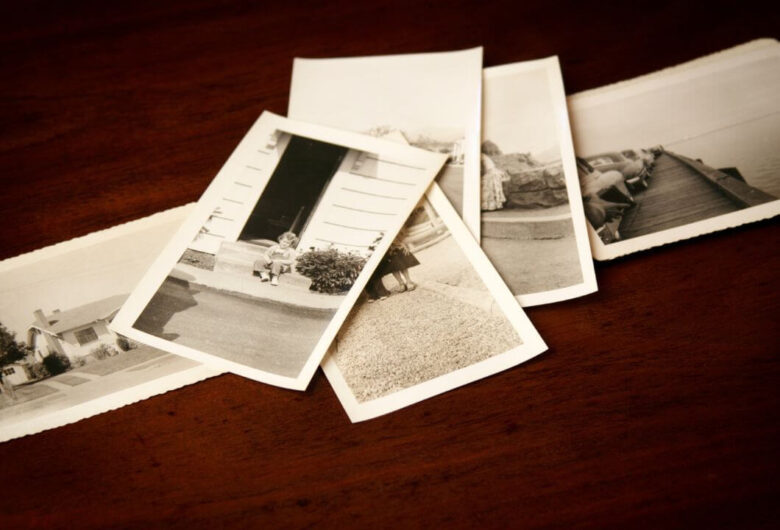
Inherited family archives are rarely tidy.
They often arrive as a mix of boxes, folders, drives, unlabeled photos, loose media, duplicates, and stories that only partly make sense.
That is why they can feel emotionally heavy even before they feel practically difficult.
You are not just organizing files.
You are dealing with family memory, uncertainty, unfinished context, and the pressure of not wanting to lose something important.
That combination makes many people freeze.
So the first thing worth saying is this: you do not need to solve everything at once.
The goal is not instant order.
The goal is to create enough structure that the archive becomes workable instead of paralyzing.
Step 1: Start with stabilization, not deep organization
When people inherit a family archive, they often want to identify, rename, sort, and clean everything immediately.
That is understandable, but it is usually too much for the first stage.
The first goal should be simpler:
- gather the material,
- stop further scattering,
- and reduce the risk of loss.
That means bringing together:
- prints,
- albums,
- USB drives,
- hard drives,
- scanned folders,
- message app batches,
- and any digital files already floating in different places.
You are not building the final archive yet.
You are stabilizing it.
Step 2: Separate physical items from digital items, but think of them as one archive
Inherited family collections often contain both.
That may include:
- printed photos,
- VHS tapes,
- albums,
- letters,
- CDs,
- external drives,
- old folders on a computer,
- and newer files sent by relatives.
These do not need to be merged immediately, but they should be understood as parts of the same broader archive.
That mindset helps later when you decide what should be digitized first, what should be preserved as-is, and what belongs together conceptually.
Step 3: Triage before organizing deeply
This is one of the most useful steps.
Instead of trying to fully organize every item right away, start with broad categories:
- preserve now,
- review later,
- unclear,
- discard.
That “discard” category should be used carefully, especially early on. But obvious clutter can still exist in inherited material too.
The point is not to be harsh.
It is to reduce the feeling that everything must be fully solved at once.
Step 4: Do not force yourself to identify everything immediately
A lot of inherited archives contain uncertainty.
You may not know:
- exact dates,
- who is in every photo,
- what event a tape belongs to,
- or which folder came from which relative.
That is normal.
Trying to force complete certainty too early often creates more stress than progress.
Broad, honest labels help a lot:
- Date Unknown,
- Unidentified Relatives,
- Event Unclear,
- Early 1990s,
- Scans to Review.
That kind of language makes the archive easier to handle without pretending to know more than you do.
Step 5: Prioritize the most fragile material first
Not everything in an inherited archive carries the same urgency.
If the collection includes:
- deteriorating prints,
- VHS tapes,
- old external drives,
- CDs or DVDs,
- or scattered digital files with no backup,
those may deserve attention before deeper sorting.
The archive does not need to be perfectly organized before you begin protecting the most vulnerable parts.
This is also where a guide like How to Digitize VHS Tapes at Home: Complete Beginner’s Guide becomes especially useful if analog video is part of what you inherited.
Step 6: Build a simple structure before building a detailed one
Once the material is more stable, create a broad archive structure.
Do not start with too much detail.
A structure based on:
- decades,
- years,
- family branches,
- or broad source groups
can be enough at first.
As the archive becomes clearer, you can add more detail without losing control.
A guide like How to Organize Thousands of Old Photos and Videos Without Starting Over fits naturally into this stage, because inherited archives often feel large before they are actually understood.
Step 7: Ask family for context while you still can
One of the most valuable things you can do with an inherited archive is gather context from other people.
That may include:
- identifying who is in a photo,
- dating an event,
- clarifying locations,
- explaining how materials were stored,
- or locating originals of files that were copied later.
You do not need to turn this into a formal research project.
Even simple conversations can preserve context that would otherwise disappear.
And once that context is gone, it is much harder to rebuild.
Step 8: Do not clean duplicates too aggressively
Inherited archives often contain repeated material.
The same photo may appear as:
- a print,
- a scan,
- a digital copy from one relative,
- a compressed copy from another,
- and an edited version saved years later.
That does not mean everything should be deleted down to one file immediately.
A careful duplicate approach matters here, which is exactly why How to Remove Duplicate Photos Without Making a Bigger Mess fits so well into inherited archive work.
Step 9: Protect the archive while it is still messy
One of the biggest mistakes is waiting until the archive is “organized enough” before backing it up.
Inherited material often contains items that are already irreplaceable.
That means protection should begin early, even if the structure is still rough.
A setup like The Complete Backup Guide for Family Photos and Videos becomes important here not after the project is done, but while the archive is still being stabilized.
Common mistakes to avoid
1. Trying to fully solve the archive in one pass
That usually leads to burnout.
2. Throwing things away too early
Inherited material often needs more patience than ordinary clutter.
3. Assuming labels are reliable
Old handwriting and folder names are clues, not always full truth.
4. Waiting too long to ask relatives for context
Memory fades quickly.
5. Treating the archive as only emotional or only technical
It is usually both.
Final takeaway
An inherited family archive can feel overwhelming because it is not just a storage problem.
It is a memory problem, a context problem, and often a preservation problem all at once.
That is why the first goal should not be perfection.
It should be stabilization.
Gather the material. Triage it broadly. Protect the fragile parts first. Accept uncertainty honestly. Ask for context while it is still available. Build simple structure before detailed structure. Back it up while the work is still in progress.
That is usually what turns an inherited archive from a burden into something you can actually care for.