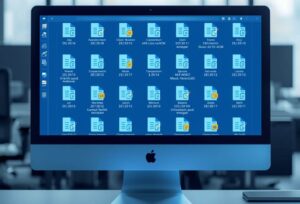

“Trip”, “Trip 2”, and “Trip New”
(A simple naming system that actually holds up)
Why naming feels trivial — until it breaks everything
Event naming feels like the smallest decision in an archive.
You think:
“I’ll just name it something obvious. I’ll remember.”
And for a while, you do.
Then time passes.
More folders appear.
Another trip happens.
Another birthday.
Another “final” version.
And suddenly your archive looks like this:
Trip
Trip 2
Trip New
Trip Final
Trip Really Final
At that point, the structure hasn’t failed — the naming has.
Why bad names age so poorly
The problem with vague names isn’t today.
It’s future you.
Bad names:
- Lose meaning over time
- Depend on memory
- Don’t scale
- Create duplicates that look different but aren’t
We’ve seen archives where nothing was technically wrong — but no one trusted the folder names anymore.
Once trust is gone, browsing stops.
The goal of event naming (this matters)
Event names don’t need to be:
- Creative
- Detailed
- Perfect
They need to be:
- Unambiguous
- Sortable
- Human-readable
- Stable over time
If a name still makes sense 10 years later, it’s doing its job — exactly the same durability goal we described in A folder structure that still works after 10 years.
The simplest naming formula that works
We use one basic pattern:
YYYY-MM Event Name
That’s it.
Example:
2019-07 Summer Trip
2021-12 Family Dinner
2015-03 Graduation
This works because:
- Date anchors the event
- Name adds meaning
- Sorting stays automatic
- No guessing required
This approach complements — not replaces — the layered system explained in Why organizing only by date fails.
Why we don’t include exact days (most of the time)
Exact dates feel precise — but they often cause trouble.
Many events:
- Span multiple days
- Have uncertain start dates
- Blend together naturally
Using month-level precision:
- Reduces false accuracy
- Prevents renaming later
- Keeps folders stable
If the exact day matters, it can live inside the folder — not in its name.
What makes a good event name
A good event name answers:
“What was this, in plain language?”
Good examples:
- “Summer Trip”
- “Birthday Party”
- “Family Reunion”
- “Graduation”
Not-so-good examples:
- “Photos”
- “Stuff”
- “Random”
- “New”
If you can’t picture the event from the name alone, it’s too vague.
How this prevents “Trip / Trip 2 / Trip New”
Here’s the key insight:
You don’t rename events — you version time.
Instead of:
Trip
Trip 2
Trip New
You get:
2018-07 Summer Trip
2020-08 Summer Trip
2023-07 Summer Trip
Same name.
Different time anchor.
Zero confusion.
This alone eliminates most duplicate naming patterns we see.
What to do when two similar events happen close together
Sometimes the month isn’t enough.
That’s okay.
Add one clarifier, not five.
Examples:
2022-05 Birthday (Home)
2022-05 Birthday (Restaurant)
or
2021-12 Holiday Dinner
2021-12 Holiday Trip
Keep it:
- Short
- Descriptive
- Stable
Avoid emotional labels like “best”, “final”, or “new”. Those age badly.
How this works with WhatsApp and messy intake
This naming system fits perfectly after intake.
WhatsApp photos arrive messy (How to organize photos when multiple people send files via WhatsApp).
Once grouped by event, you give them:
- A time anchor
- A clear name
- A permanent home
Naming happens after context is restored, never before.
A mistake we made early on
We once used names like:
- “Vacation”
- “Vacation Updated”
- “Vacation Fixed”
It made sense for about three weeks.
Years later, we had no idea:
- Which one was which
- Which one was complete
- Which one was safe to delete
That experience taught us:
Names should not depend on memory.
What about people and places in names?
We use them sparingly.
Good:
2017-04 Paris Trip
2016-09 Anna Graduation
Not great:
2017-04 Paris Anna Mark Hotel Museum Final
Names are not metadata containers.
They’re signposts.
People and places can live:
- Inside the folder
- In notes
- In metadata later
This avoids the overloading problem we warned about in Organizing family photos by generations without turning the archive into chaos.
A quick self-test for any event name
Before settling on a name, we ask:
“Would this still make sense to someone else?”
If the answer is yes, it’s probably good.
If the answer is “well, I know what I meant”, it’s not.
Why this matters more than it seems
Event names affect:
- Browsing speed
- Trust in the archive
- Willingness to keep organizing
- Ease of backup verification
When names are clear, everything downstream works better — including backups and audits (The 10-minute monthly backup check).
A calm takeaway
You don’t need perfect names.
You need stable, honest ones.
When event names carry time and meaning — and nothing extra — your archive stops growing sideways and starts growing forward.
What’s next
The last high-traffic upgrade tackles a bigger decision:
👉 Folders vs catalogs: Lightroom, Google Photos, and what actually works long-term.
That one closes the loop between organization, software, and preservation.